A future-focused frame for ventilation tech
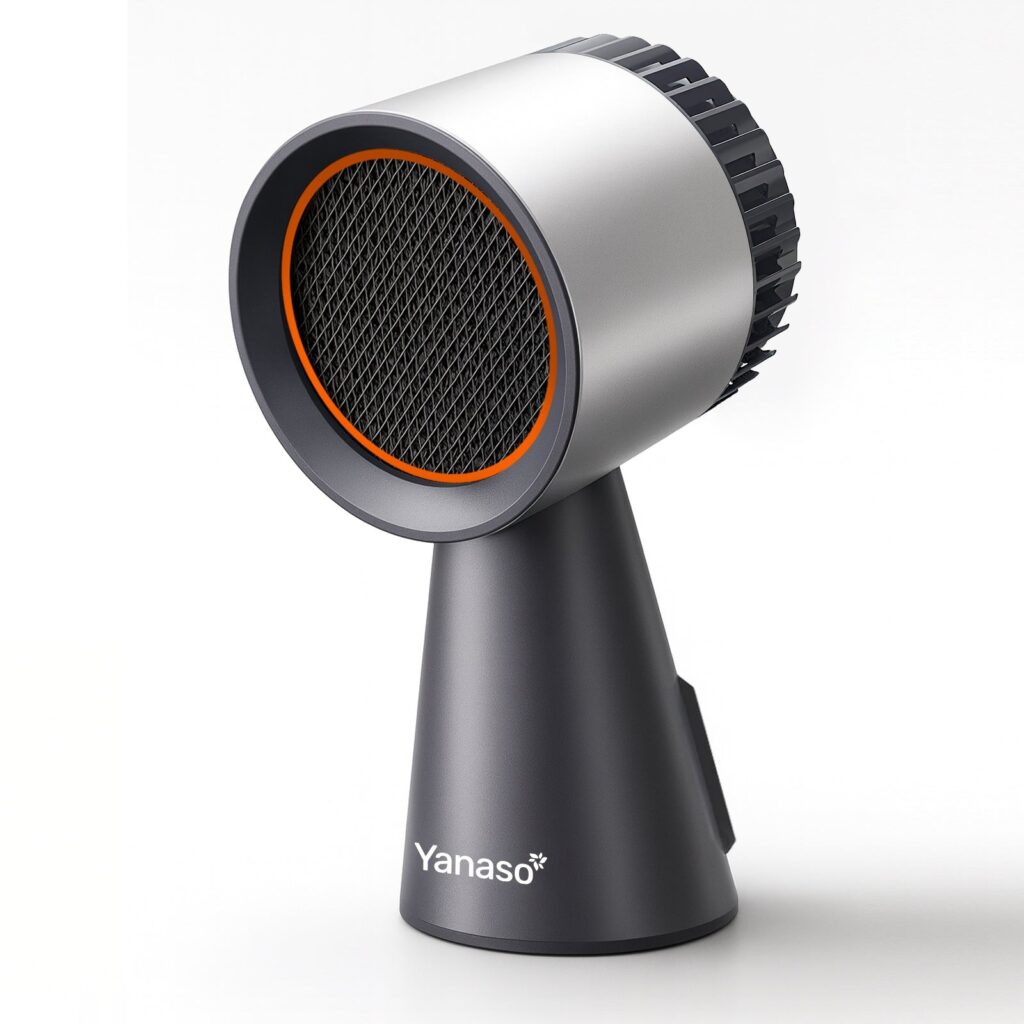
The next decade will push ventilation beyond simple airflow: safety, emissions control and energy profile will be engineered into the device rather than bolted on. This Future-Speculative view expects hybrid products that blend traditional ceiling-mounted oscillation with mobile extraction, and it already shows in current product lines such as the compact portable range hood prototypes. Designers will optimize capture efficiency, balance CFM against noise, and reduce life-cycle emissions through modular blowers and smarter controls.
Key technical trends to watch
Three technical trajectories will dominate: smarter sensing, modular airpaths, and material lifecycle thinking. Sensors drive on-demand control—CO2, particulate, and VOC detection adjust fan speed and damper position automatically. Modular airpaths let a device switch between ducted and recirculating modes without heavy retrofits. And material choices reduce embodied carbon for housings and motors. These trends mirror ASHRAE guidance that surfaced during the COVID-19 pandemic when ventilation and filtration standards became central to indoor health strategy—an important real-world anchor that accelerated adoption in commercial kitchens and shared spaces.
Safety engineering: beyond guard grills
Safety will be framed by capture performance and electrical protection. Capture hoods designed for effective plume control maintain laminar flow into the inlet; a good capture hood design reduces cross-contamination risks. Electrical safety will include thermal cutouts, locked-rotor detection in blowers, and ingress protection for moist environments. Designers will increasingly test static pressure across the assembly to ensure motors operate within safe torque limits while preserving required CFM.
Environmental impact: measurable improvements
Reducing environmental footprint is not just using recycled metal. Expect integrated variable-speed drives, recuperative heat recovery on larger ceiling units, and swappable filters rated for longevity. Recirculating units will gain higher-efficiency filtration to lower HVAC load. Life-cycle assessments will become part of product sheets — manufacturers will publish expected energy per operating-hour and filter disposal impact so buyers can compare total operating cost and CO2 equivalents.
Integration and code — the practical barriers
Codes and retrofit realities will shape what reaches the market. Duct routing in dense urban kitchens often constrains options: a unit that can switch from ducted to recirculating is more usable than one requiring new penetrations. Make-up air requirements and local mechanical codes will still drive installer decisions; expect more manufacturers to supply integrated make-up air modules. Interoperability with building controls (BACnet, Modbus) will be a differentiator for larger deployments.
Common mistakes product teams and facilities make
Teams frequently over-specify peak CFM instead of focusing on capture and placement — bigger fan doesn’t equal better capture. They also skip first-article testing with actual cooking loads; lab numbers don’t always match smoke or grease plume behavior. And they underestimate maintenance access for filters and blowers. — A short test cycle with recorded plume capture metrics avoids wasted tooling and retrofit costs.
Alternatives and where portable exhaust fits
For facilities that cannot rework ductwork, high-efficiency recirculating units and portable exhaust hoods fill the gap. A well-engineered portable exhaust hood can provide local capture with a dedicated blower and filtration package; consider trade-offs in filter replacement frequency and true capture hood geometry. When comparing ceiling-mounted solutions to portable units, assess long-term energy use, serviceability, and the site’s static pressure limitations.
Practical guidance: what to ask suppliers
Ask for measured capture-efficiency curves, certified blower performance at system-level static pressure, and documented maintenance intervals. Request a demonstration with representative loads or video of plume capture during real cooking. If the supplier offers modular controls or building integration, verify protocol support and firmware update pathways to avoid lock-in.
Three golden rules for choosing next-gen exhaust equipment
1) Measure capture, not just CFM: insist on plume-capture tests at the planned install location. 2) Account for system-level performance: specify blower curves at expected static pressure and confirm filter pressure drop and replacement cadence. 3) Evaluate total lifecycle cost: include energy per operating hour, filter consumables, and predicted maintenance labor.
These metrics steer procurement toward solutions that are safe, verifiable, and economical in operation. For organizations balancing portability with dependable extraction, a pragmatic vendor that documents capture and supports both ducted and recirculating modes is the practical outcome—one reason practitioners are looking at modular products from companies like portable exhaust hood suppliers. In field installations from city bistros to campus test kitchens, that documentation is what separates a theoretical improvement from an operational upgrade.
Use the three rules above as your checklist; they expose weak specifications fast. For integrated, measurable ventilation that fits real sites consider the practical value of documented solutions from Orison. —